



Many small and medium-sized businesses in Poland struggle to create modern, effective websites within budget. You face decisions about platforms, features, and costs without clear guidance. This guide offers a clear, step-by-step approach to website development in 2026 to help align your website with your business goals and optimize costs. You will learn how to choose the right website type, budget realistically, avoid common mistakes, and build a site that drives growth.
Table of Contents
- Understanding Your Website’s Purpose And Options
- Preparing Your Budget And Choosing Cost-Effective Technologies
- Step-By-Step Website Development Process
- Common Mistakes And How To Avoid Them
- Professional Website Development Services To Accelerate Your Growth
- FAQ
Key takeaways
| Point | Details |
|---|---|
| Define website purpose first | Understanding your site’s primary role prevents wasted resources and guides all development decisions. |
| Choose appropriate website type | Landing pages, company sites, and e-commerce stores serve different goals with varying budgets. |
| Select cost-effective technology | Modern frameworks and low-code platforms reduce costs while maintaining quality and scalability. |
| Follow structured development steps | A methodical process from planning through launch ensures efficiency and better results. |
| Avoid common pitfalls | Ignoring mobile usability, SEO, and performance can harm your site’s effectiveness and increase long-term costs. |
Understanding your website’s purpose and options
Before you invest in development, define what you need your website to accomplish. Your site might generate leads, close sales, showcase your portfolio, or provide information to customers. Each purpose requires different features and investment levels.

You have several website types to consider. A landing page focuses on a single conversion action, making it ideal for campaigns or specific services. Company websites present your business comprehensively with multiple pages covering services, team, and contact information. E-commerce stores enable direct online sales with product catalogs, shopping carts, and payment processing.
Choosing the right type of website is crucial for aligning with business goals and budget constraints. Avoid adding unnecessary features early. Start with core functionality that supports your primary business objective, then expand as you grow.
Here are your main website options:
- Landing page: Single-purpose site for lead capture or specific campaign, budget 2,999 to 5,000 PLN
- Company website: Multi-page site with services, about, contact, and portfolio, budget 5,000 to 15,000 PLN
- E-commerce store: Full online shop with product management and payment processing, budget 15,000 to 25,000 PLN and beyond
- Portfolio site: Visual showcase for creative professionals, budget 3,000 to 8,000 PLN
Consider how choosing the right SEO agency complements your website development strategy. Strong SEO foundations built during development save you from costly retrofitting later.
Preparing your budget and choosing cost-effective technologies
Realistic budgeting prevents surprises and helps you make informed technology choices. Average website development costs for SMBs in Poland range from 2,999 PLN to 25,000 PLN depending on complexity and features. Your budget should account for initial development plus ongoing maintenance.
Consider this important reality: a cheap website can cost more than an expensive one over three years. Poor initial choices lead to frequent fixes, security issues, and eventual rebuilds.
Here is how different approaches compare:
| Approach | Cost Range (PLN) | Best For | Key Benefits |
|---|---|---|---|
| DIY builders (Wix, Squarespace) | 1,500 to 3,000 | Very small businesses, simple needs | Quick setup, low initial cost |
| WordPress with themes | 3,000 to 8,000 | Standard business sites | Flexibility, large plugin ecosystem |
| Custom WordPress development | 8,000 to 15,000 | Growing businesses needing customization | Tailored features, better performance |
| Webflow/low-code platforms | 5,000 to 12,000 | Design-focused sites, marketing teams | Visual editing, clean code output |
| Custom development (Jamstack) | 12,000 to 25,000+ | Performance-critical, scalable sites | Speed, security, developer control |
Modern technology makes quality websites more accessible. SMEs can build responsive websites at a fraction of traditional costs with modular UI frameworks, low-code builders, AI-driven testing, and cloud-edge hosting. These tools deliver professional results without enterprise budgets.
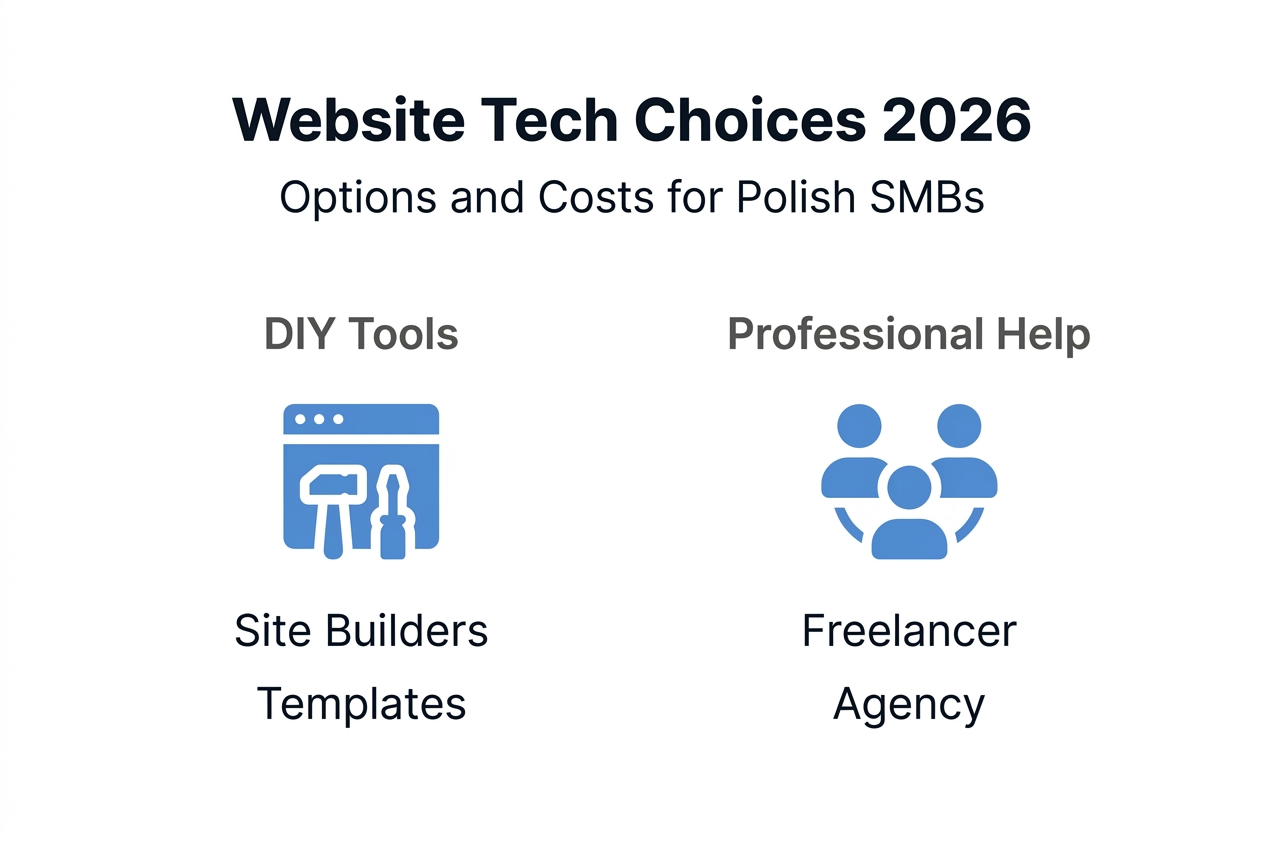
Pro Tip: Invest in quality hosting and responsive design from day one. Cheap hosting creates slow load times and security vulnerabilities that cost far more to fix later than the initial savings.
Explore our transparent website pricing options to understand what different investment levels deliver. Budget planning works best when you know exactly what you are buying. Regular assessing website performance helps justify your technology choices with data.
Step-by-step website development process
Following a structured process keeps your project on track and within budget. Here is your roadmap:
-
Define specific goals: Write down exactly what you want your website to achieve. Set measurable targets like generating 50 monthly leads or selling 200 products per month.
-
Choose your platform: Select technology based on your goals, budget, and technical comfort level. Match platform capabilities to your requirements, not the other way around.
-
Plan user experience: Map customer journeys from landing to conversion. Prioritize the 20% of pages that drive 80% of results like landing, contact, case studies, about, services, and home pages.
-
Design for mobile first: Start with mobile layouts, then expand to desktop. Over 60% of Polish web traffic comes from mobile devices in 2026.
-
Develop and test iteratively: Build in phases, testing each component before moving forward. This catches issues early when they are cheaper to fix.
-
Optimize for performance: Compress images, minimize code, enable caching, and test load times. Aim for under 3 seconds on mobile.
-
Launch strategically: Deploy to a staging environment first for final testing. Plan your launch for low-traffic periods to address any immediate issues.
-
Monitor and improve continuously: Track analytics, gather user feedback, and make data-driven improvements. Your website evolves with your business.
Pro Tip: Focus early efforts on mobile-first design and fast loading times. Google prioritizes mobile performance in rankings, and users abandon slow sites within seconds.
Your website succeeds when it converts visitors into customers. Apply conversion rate optimization principles during development, not as an afterthought. Strong foundations prevent expensive retrofitting.
Integrate SEO from the start by following our SEO optimization guide. Search visibility determines whether anyone finds your carefully built website.
Common mistakes and how to avoid them
Learning from others’ mistakes saves you time and money. Here are the pitfalls Polish SMBs frequently encounter:
-
Overbuilding beyond needs: Adding features you think you might need someday inflates costs and complicates maintenance. Build what you need today, add features when you actually need them.
-
Ignoring mobile users: Designing primarily for desktop alienates the majority of your visitors. Test every page on actual mobile devices, not just browser simulators.
-
Neglecting SEO foundations: Adding SEO after launch means rebuilding site structure, URLs, and content architecture. Integrate technical SEO during development.
-
Choosing slow hosting: Saving 50 PLN monthly on hosting costs you customers and search rankings. Fast, reliable hosting is not negotiable.
-
Skipping security measures: Unprotected sites get hacked, leading to data breaches, blacklisting, and total rebuilds. Implement SSL, regular backups, and security updates from launch.
-
Poor content hierarchy: Confusing navigation and unclear page structure frustrate visitors and kill conversions. Plan information architecture before designing.
-
No clear call to action: Visitors need obvious next steps on every page. Make contact forms, purchase buttons, and lead magnets prominent and compelling.
Here is essential context for Polish SMBs:
Most small businesses in Poland don’t need complex websites; they need something reliable with SEO, clear contact info, and fast mobile load time.
Simplicity beats complexity for most business websites. Focus on doing the basics exceptionally well rather than adding advanced features that provide marginal value.
Learn mastering SEO basics to avoid the most common optimization mistakes. Our guide on improving website performance addresses technical issues that slow down Polish business sites.
Professional website development services to accelerate your growth
You now understand the complete website development process, from planning through launch and maintenance. Implementing these steps yourself is possible, but partnering with experienced professionals can save time and ensure your website truly supports your growth goals.
Lerox Studio offers expert services tailored to Polish SMB needs. Whether you need to fix your website or build from scratch, we focus on creating modern, secure, and scalable digital infrastructures that drive results.
Our assessing and improving website performance service identifies exactly what your site needs to compete effectively in 2026. We analyze speed, mobile usability, SEO foundations, and conversion paths to prioritize improvements with the highest business impact.
Transparent website development pricing helps you plan an investment that aligns with your business objectives. We work as your strategic partner, not just a vendor, ensuring your website becomes a genuine growth asset rather than a maintenance burden.
FAQ
Is it better for a small business in Poland to hire a freelancer or an agency for website development?
Freelancers work well for straightforward sites with limited budgets, typically charging 1,500 PLN to 6,000 PLN compared to agencies at 5,000 PLN to 15,000 PLN. Agencies provide broader expertise, better reliability, ongoing support, and complete service teams for growing businesses. Choose based on your project complexity, timeline, and need for long-term support rather than just initial cost.
How can I ensure my website loads quickly and is mobile-friendly?
Use responsive design frameworks and modern hosting solutions optimized for Polish audiences. Optimize images through compression, minimize JavaScript, and enable browser caching to reduce load times. Customers expect instant loading, frictionless UX, and mobile-first interactions from modern websites. Regularly test Core Web Vitals through Google Search Console and use assessing website performance tools to monitor and improve speed continuously.
What are the main ongoing costs of maintaining a website?
Typical ongoing costs include hosting (50 to 300 PLN monthly), domain renewal (50 to 100 PLN yearly), CMS and plugin updates, security monitoring, and marketing tools. DIY platforms like Wix cost around 50 to 80 PLN monthly; over three years, this totals over 2,500 PLN as attendant costs add up. Budget 10 to 15% of your initial development cost annually for maintenance and improvements.
Should I build my website myself or hire professionals?
Build yourself if you have technical skills, time, and a very simple website need like a single landing page. Hire professionals when your website directly impacts revenue, when you lack technical expertise, or when you need custom functionality. Professional development typically pays for itself through better conversion rates, stronger SEO performance, and avoided costly mistakes. Consider hybrid approaches where professionals handle complex aspects while you manage content updates.
How long does professional website development take?
Simple landing pages or template-based sites take 2 to 4 weeks from start to launch. Standard company websites with custom design require 6 to 10 weeks. Complex e-commerce or custom applications need 12 to 20 weeks depending on features. Timeline depends on your preparation, content readiness, feedback speed, and project scope. Clear goals and prepared content significantly accelerate development.
